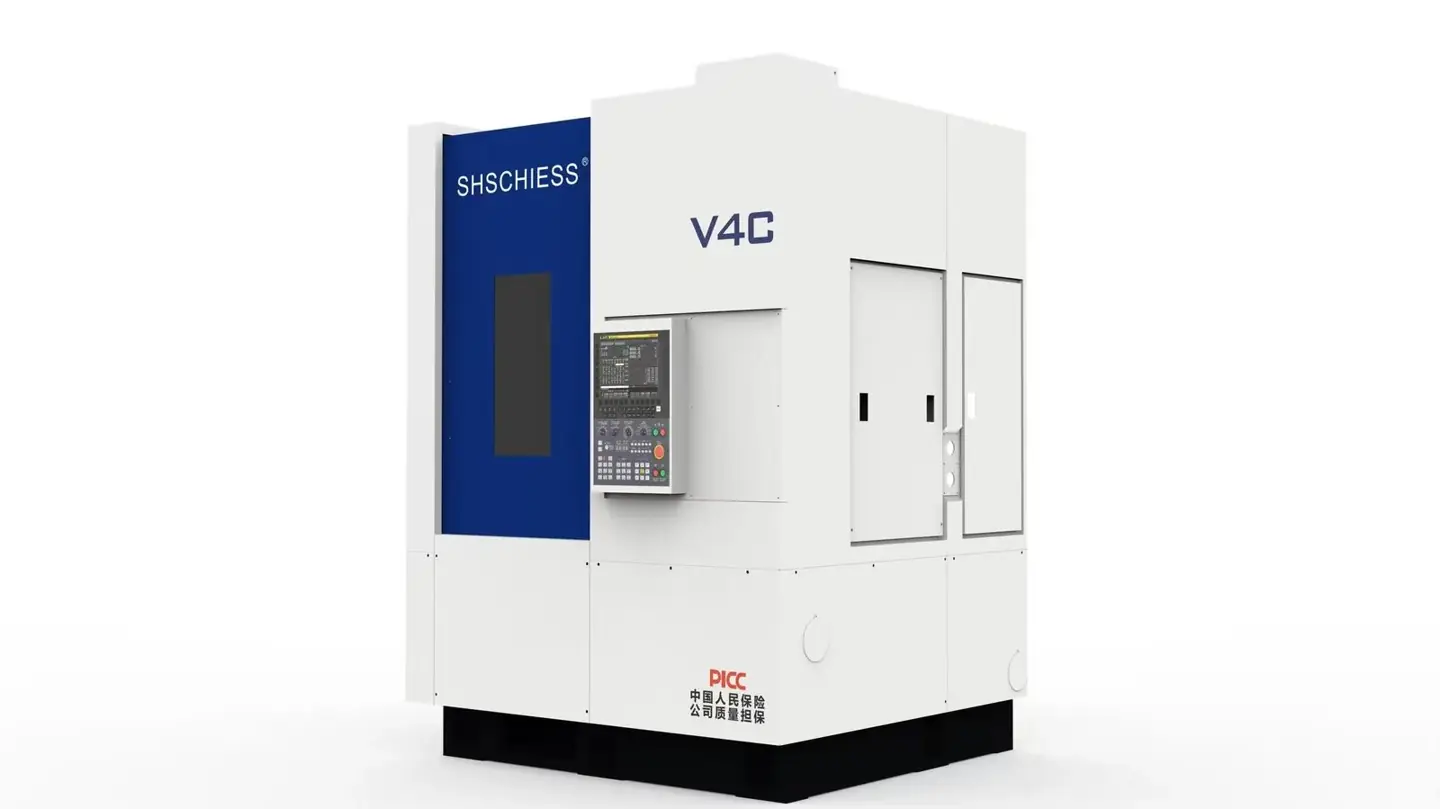
Representative series image. Configuration and enclosure may vary.
VERTICAL CNC LATHES
V6C
Vertical turning for disc-shaped components. The upright spindle supports convenient loading of heavy workpieces.
Configured to order. Final specification, delivery and pricing are confirmed in your quotation.
TECHNICAL PROFILE
The details
that matter.
Reference configuration from manufacturer technical documentation. Options and document editions can differ; agree the exact configuration before ordering.
| Parameter | Specification | Unit |
|---|---|---|
| Swing over bed | 860 | mm |
| Maximum cutting height | 700 | mm |
| Maximum turning diameter | 800 | mm |
| Spindle nose | A2-11 | |
| Spindle speed range | 50–1500 | rpm |
| Maximum spindle torque | 1245 | Nm |
| Chuck diameter | 21" | inch |
| X rapid traverse | 16 | m/min |
| Z rapid traverse | 16 | m/min |
| X-axis travel | 600(vertical turret) | mm |
| Z-axis travel | 720 | mm |
| Maximum spindle load | 600 | kg |
| Machine weight | 10500 | kg |
| Power capacity | 50 | kVA |
| Machine dimensions (L × W × H) | 3400×2200×3300 | mm |
FROM SPECIFICATION TO PRODUCTION
Let your component
lead the conversation.
Share the workpiece
Send material, dimensions, drawings and your required tolerances.
Define the process
Review workholding, tooling, spindle speed and control requirements.
Confirm the configuration
Agree a technical proposal, acceptance criteria and delivery schedule.
CONFIGURATION IN CONTEXT
Planning with V6C.
Review diameter, height and mass
Select around the complete clamped assembly. Maximum turning diameter and height are separate limits; chuck dimensions, jaw height and tool approach also affect whether a component fits.
Make loading part of the process
Disc and ring components need a safe, repeatable loading plan. Describe the component mass, lifting method and clamping surfaces before choosing the chuck and fixture.
Match the speed to the cut
Compare the published spindle speed range with material and cutting diameter. A larger nominal capacity does not establish cutting torque or cycle time; request a configuration-specific process review.
V6C or V6i?
These are published differences between the reference configurations. They help narrow a shortlist; they do not establish interchangeable tooling or identical performance.
| Parameter | V6C | V6i |
|---|---|---|
| Swing over bed | 860 mm | 800 mm |
| Maximum cutting height | 700 mm | 740 mm |
| Maximum turning diameter | 800 mm | 600 mm |
| Spindle speed range | 50–1500 rpm | 50–2000 rpm |
PRACTICAL ANSWERS
V6C FAQ
What is the swing over bed of V6C?
V6C lists 860 mm for swing over bed in the reference configuration. Confirm this value in the order-specific technical agreement and check tooling and workholding clearance.
What is the maximum cutting height of V6C?
V6C lists 700 mm for maximum cutting height in the reference configuration. Confirm this value in the order-specific technical agreement and check tooling and workholding clearance.
What is the maximum turning diameter of V6C?
V6C lists 800 mm for maximum turning diameter in the reference configuration. Confirm this value in the order-specific technical agreement and check tooling and workholding clearance.
What should I compare with V6C?
V6i is another model in this machine family. Review the differences above and both specification tables against the same drawing, tooling and installation requirements.
What is the price and delivery time for V6C?
This machine is configured to order. Send your controller preference, workpiece details, accessories and delivery destination so the team can confirm a complete quotation and production schedule.
How will V6C be inspected before acceptance?
Agree the supplied configuration, geometric checks, sample machining and measurement method before ordering. Factory pre-acceptance and acceptance after installation should use the agreed technical requirements. See our quality and acceptance guide for the inspection planning process.
YOUR NEXT PRODUCTION CHAPTER
Let’s build what
comes next.
Start with your component, material and production target. We will help define the machine configuration.
Discuss your project